A Moment of Courage
52 Ancestors in 52 Weeks - Week 40
Cuban Missile Crisis
My dad, Gary Alan Nisleit, was only 17 years old when he enlisted in the U.S. Army on June 23, 1961, just weeks after graduating from high school. By the summer of 1962, he was stationed with the 3rd Infantry Division in Schweinfurt, West Germany. He turned 19 that September.
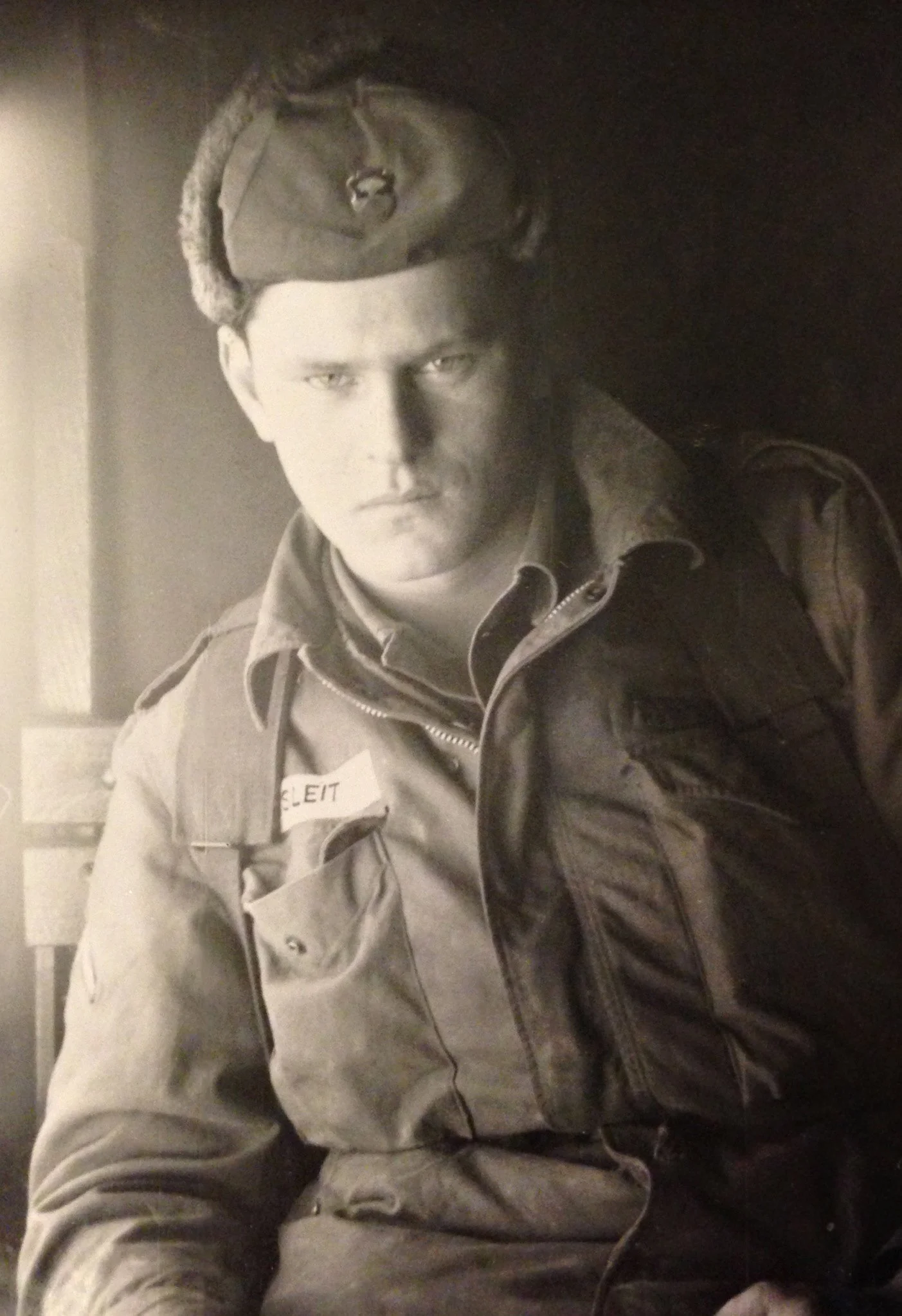
Gary Alan Nisleit - US Army. One of my all time favorite pictures of my Dad
A month later came the Cuban Missile Crisis.
For thirteen tense days in October 1962, the United States and Soviet Union came frighteningly close to nuclear war. Although the crisis centered on Soviet missiles in Cuba, American officials were also deeply concerned that the confrontation could spread to Europe, particularly Berlin. Contemporary U.S. records show that officials explicitly considered possible Soviet action against Berlin in response to American action in Cuba.[1]
Dad told me that he and his best Army buddy, Johnny Higdon, truly believed war was about to begin and that they were close to where the fighting would take place.
I wish I had listened more carefully when Dad told me the story, because some of the details have faded from my memory. But there is one part I have never forgotten.
Dad and Johnny cut themselves and mixed their blood, becoming 'blood brothers.'
Blood brothers refer to two or more people not related by birth who have sworn loyalty to each other. Each person makes a small cut, usually on a finger, hand, or the forearm, and then the two cuts are pressed together and bound, the symbolism being that each person's blood now flows in the other person’s veins.
They were two 19-year-old soldiers far from home, frightened by the very real possibility that they might soon be fighting a war against the Soviet Union. I don't know exactly what they said to one another that day, but their little ceremony must have meant something to both of them.
The danger they feared was not imaginary. White House and State Department records from October 1962 show that the administration was simultaneously dealing with Cuba and preparing for possible Soviet moves in Berlin. General Lauris Norstad, the U.S. and NATO commander in Europe, did not simply apply the worldwide DEFCON 3 posture to his European command; instead, he ordered specific readiness measures for U.S. and Allied forces under his command.[2]
Dad and Johnny made it through the crisis. By Thanksgiving, Dad was still in Schweinfurt. Among the things he saved for the rest of his life was his 1962 Thanksgiving menu. Its message to the young soldiers seems especially poignant now: keeping the nation "strong and alert" had placed them a long way from home.
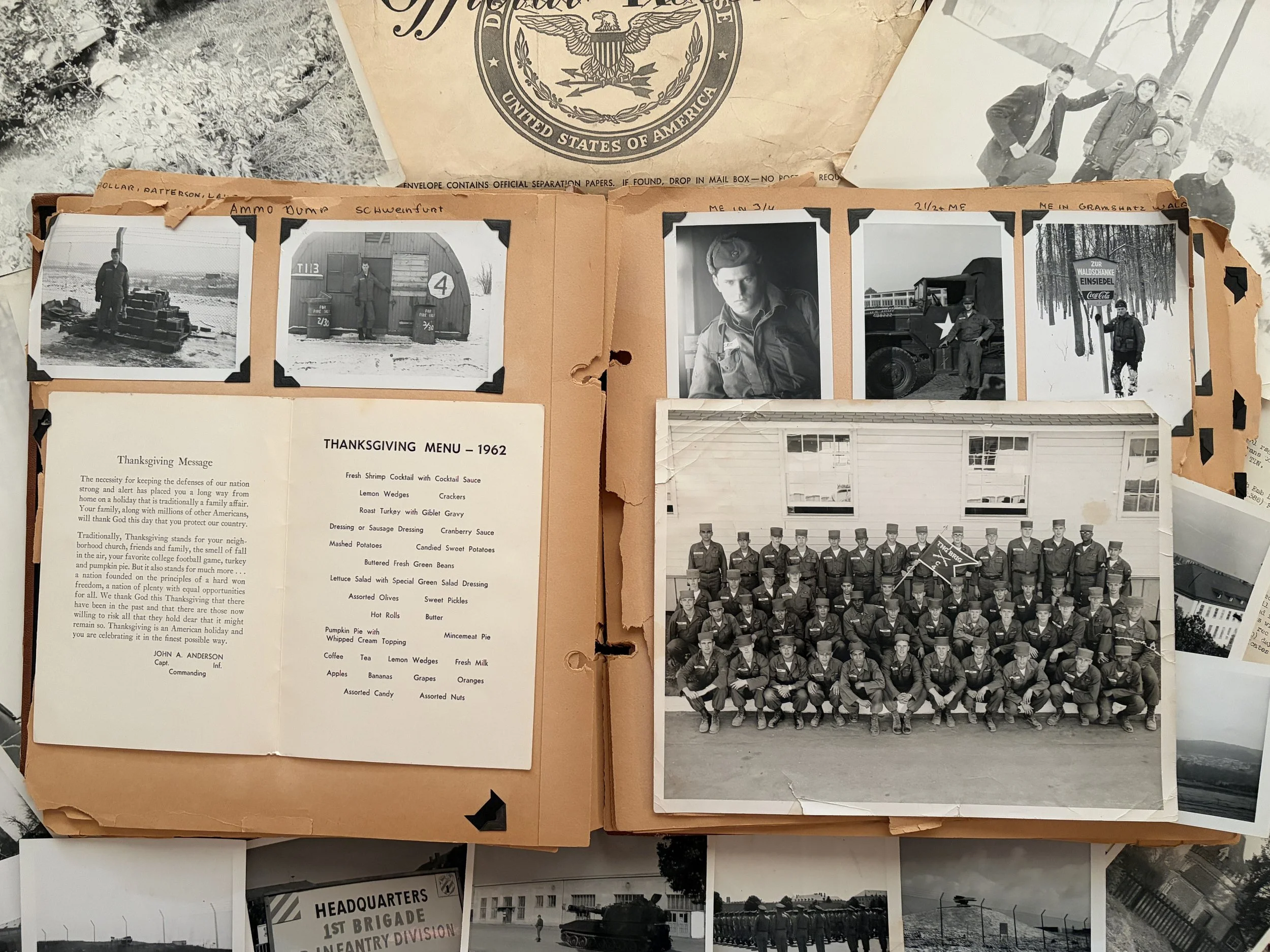
Gary Alan Nisleit’s Army Scrapbook
“The necessity for keeping the defenses of our nation strong and alert has placed you a long way from home on a holiday that is traditionally a family affair. Your family, along with millions of other Americans, will thank God this day that you protect our country.”
Dad eventually returned home in June 1964. He left the Army and later enlisted in the Air Force. Life moved on, and somewhere along the way he lost touch with Johnny.
More than 40 years later, when the Internet made finding people a little easier, Dad decided he wanted to find his old friend. Since computers weren't my Dad's strong suit, I helped him search. We eventually made contact with one of Johnny's relatives and learned that his life had apparently taken a very difficult turn. The last information they had was that Johnny was homeless and living down in Florida.
I remember my dad crying when he heard the news.
At the time, I don't think I completely understood why finding Johnny mattered so much to him.
I think I understand better now.
When I look at the photographs in Dad's Army scrapbook, I don't see seasoned soldiers. I see boys. Dad had left home at 17. He was only 19 during the Cuban Missile Crisis. And somewhere in Germany, during one of the most frightening moments of the Cold War, two very young men promised in their own way that they were in it together.
Dad never forgot his blood brother.
Historical note on Gary's unit
Gary's later records identify his organization as the 2nd Battalion, 30th Infantry. The U.S. Army Center of Military History shows that in October 1962 the organization was still designated the 2nd Battle Group, 30th Infantry; it was reorganized and redesignated the 2nd Battalion, 30th Infantry on April 1, 1963.[3]
Sources
[1] U.S. Department of State, Office of the Historian, Foreign Relations of the United States, 1961-1963, vol. XV, Berlin Crisis, 1962-1963, Document 145, "Telegram From the Department of State to the Mission to the North Atlantic Treaty Organization and the European Regional Organizations," October 28, 1962. https://history.state.gov/historicaldocuments/frus1961-63v15/d145
[2] U.S. Department of State, Office of the Historian, Foreign Relations of the United States, 1961-1963, vols. X/XI/XII, Microfiche Supplement, Document 450, "Memorandum for the Record," October 29, 1962. This record notes that General Norstad ordered specific readiness measures for U.S. and Allied forces under his command. https://history.state.gov/historicaldocuments/frus1961-63v10-12mSupp/d450. See also Document 368, October 23, 1962: https://history.state.gov/historicaldocuments/frus1961-63v10-12mSupp/d368
[3] U.S. Army Center of Military History, "2d Battalion, 30th Infantry Regiment: Lineage and Honors." The lineage states that the 2d Battle Group, 30th Infantry was reorganized and redesignated as the 2d Battalion, 30th Infantry on April 1, 1963. https://history.army.mil/Portals/143/LineageAndHonorsDocuments/InfantryIncludingRangers/2d%20Battalion%2030th%20Infantry%20Regiment.pdf
Family sources: Gary Alan Nisleit's Army scrapbook, service orders, 1969 National Agency Check Request, 1962 Thanksgiving menu, photographs labeled "Johnny + Me," and family recollections.