What Wasn’t Written Down
52 Ancestors in 52 Weeks
As genealogists, we spend a lot of time looking for what was written down—birth certificates, marriage records, census records and obituaries. But sometimes what wasn’t written down is even more interesting.
That is definitely the case with my great-grandparents, Jesse Sanders and Eva Adkins.
In 1918, Jesse and Eva obtained a marriage license in Pulaski County, Arkansas. I even have a photograph of the two of them that I have often wondered might have been taken around the time of their wedding. Jesse was a farmer, and he is wearing a tie—not exactly everyday farm attire!
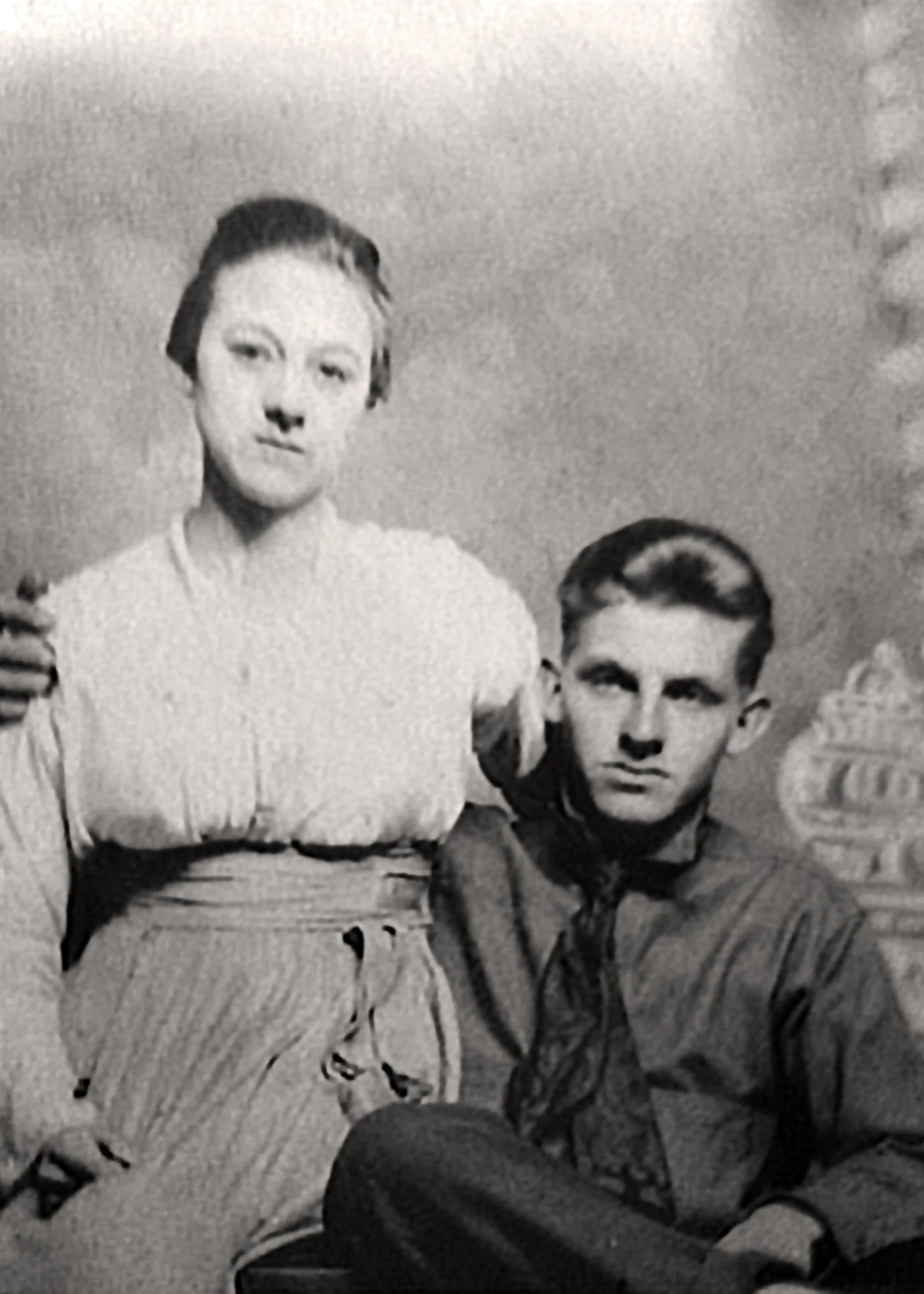
Eva Paulina Adkins and Jesse Sander about 1918
But here’s the mystery: I have never found evidence that their marriage was actually completed and returned to the courthouse.
Did they have a wedding and the paperwork simply never get recorded? Did Jesse and Eva believe they were legally married? Their family certainly seems to have considered them husband and wife. Unfortunately, I will probably never know.
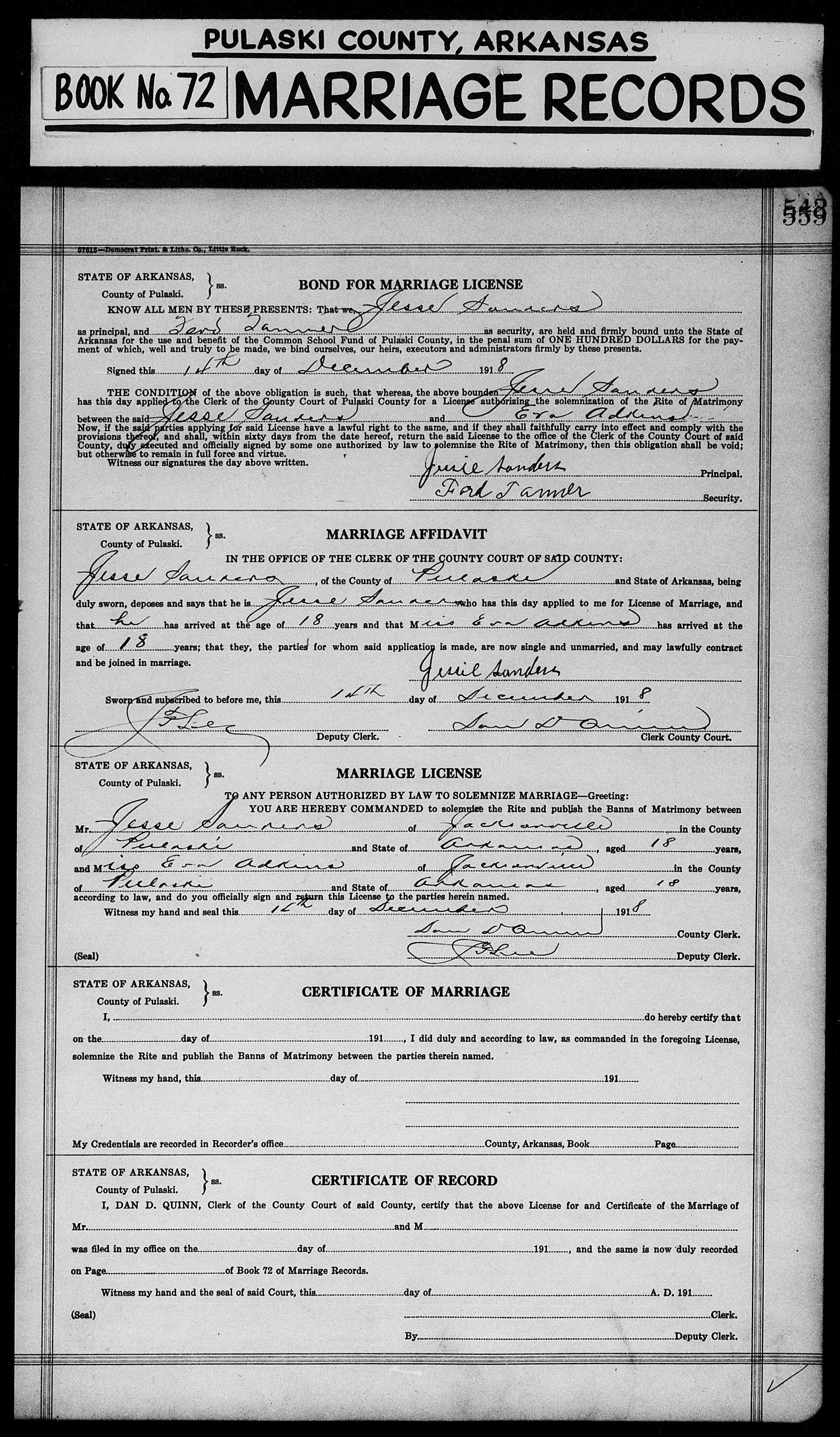
Marriage license of Jesse and Olgie that was not signed and returned by officiant.
Their story gets even more complicated.
My grandmother, Olgie May Sanders, was born at home in Bayou Meto in 1920. Jesse died of tuberculosis just weeks later. Jesse is listed as single on his death certificate.
Many years later, DNA revealed something else that had never been written down: Jesse was not Olgie’s biological father.
DNA answered that question, but it also created so many more.
Did Jesse know Olgie wasn’t his biological child? Did Eva ever tell anyone who the father was? And did Jesse and Eva even really stand together somewhere in 1918 and exchange wedding vows?
I have the marriage license. I have their photograph. I have birth and death records, family stories and now DNA.
What I don’t have is Eva and Jesse’s version of the story.
Whatever really happened, no one wrote it down.