Sheboygan, Wisconsin
52 Ancestors in 52 Weeks - A Spot on the Map
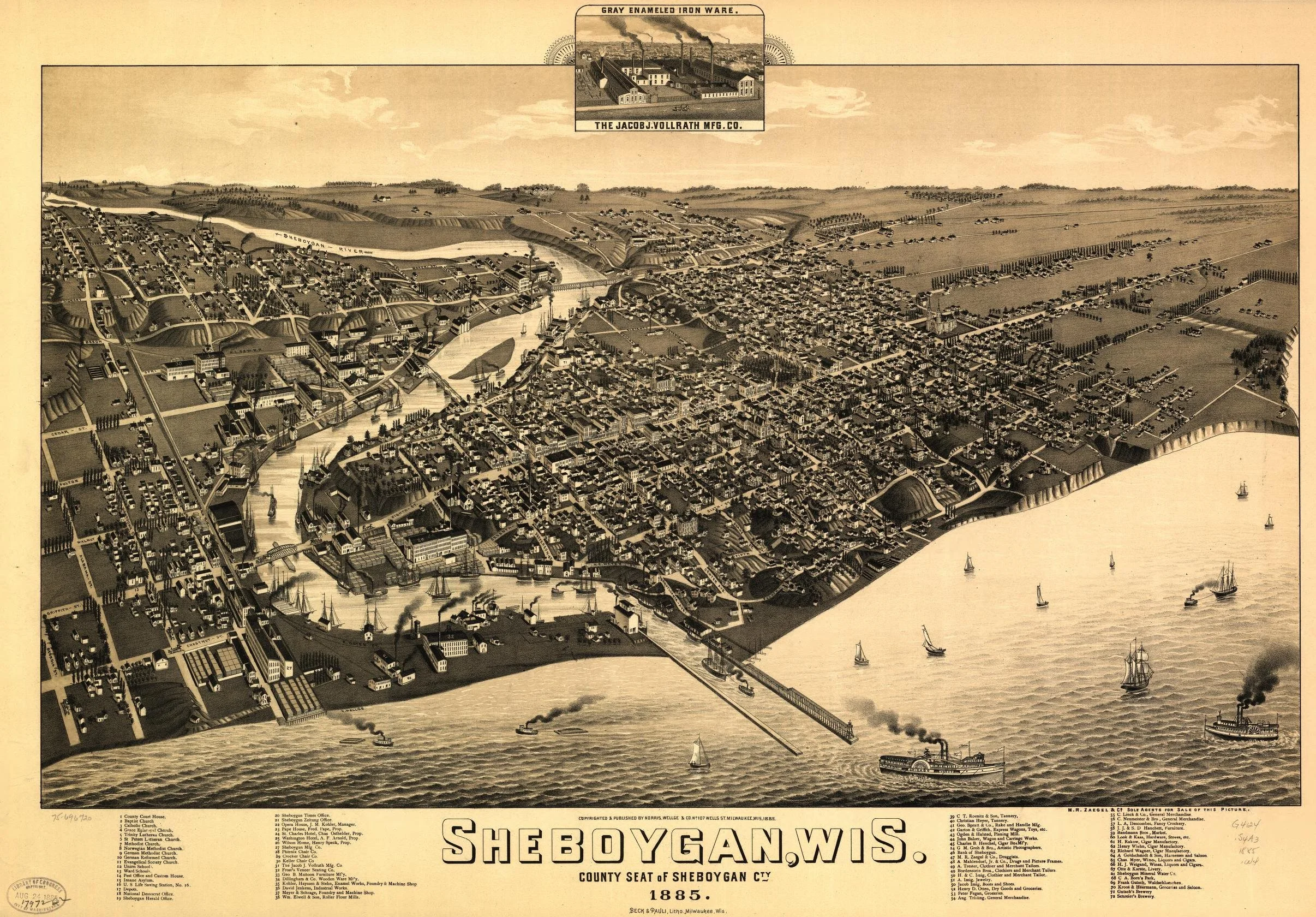
Sheboygan, Wisconsin. From the Library of Congress
Overview of Sheboygan’s History
Sheboygan, Wisconsin, has a rich history shaped by Native American heritage, European settlement, immigration, and industry. This overview traces that civic history before connecting it to my family’s arrival in the city.
Native American Heritage and Name Origins
Before European settlement, the area was inhabited by Native American tribes, including the Potawatomi, Chippewa, Ottawa, Winnebago, and Menominee. The name “Sheboygan” is commonly believed to derive from a Chippewa word associated with waterways, a reference that reflects the city’s geography and its relationship to nearby waters.
Settlement, Immigration, and Economic Growth
After the 1831 Treaty of Washington ceded the land from Native Americans to the United States, the area became available for American settlement. By the mid-19th century, Sheboygan had developed a significant German immigrant population, especially after the revolutions of 1848 in Europe prompted many families to seek new opportunities in America.
As Sheboygan grew, furniture manufacturing became one of the industries that helped define the city and contributed to nicknames such as the “City of Cheese, Chairs, Churches, and Children.” For many immigrant families, that economic growth helped turn Sheboygan into a place to build work, community, and identity.
My Family’s Connection to Sheboygan
Sheboygan’s immigrant history gives personal meaning to my family’s story because several branches of my family arrived there from German-speaking communities across Europe and Russia.
Family Arrival Timeline
My father’s biological paternal ancestors came to Sheboygan from Germany with the family surnames Schreiber, Braun, Steinbruecker, and Werkmeister, arriving around 1850–1860.
The next branch to arrive was my father’s social paternal family, ethnic Germans with the family surnames Kater, Helfensteller, and Nisleit, who came to Sheboygan from Prussia, Lithuania, and Poland.
The last to arrive were my father’s maternal relatives, the Volga German families Dahmer and Neuwirth, who came from Reinwald, Russia, around 1912–1913 after a brief stay in Kenosha.
Closing Reflection
Seen together, Sheboygan’s history and my family’s migration story show how the city’s identity was shaped not only by settlement and industry, but also by families who carried their cultures, languages, and traditions into a new community.